Undead Sorcery in Neon Flesh: Scary Zombies
Explore the myth of scary zombies in Faces & Hellscapes — undead sorcery blazing in neon flesh, where horror becomes ritual and decay becomes dark devotion.
FACES AND HELLSCAPES
Marcel Helmar
10/21/202520 min read
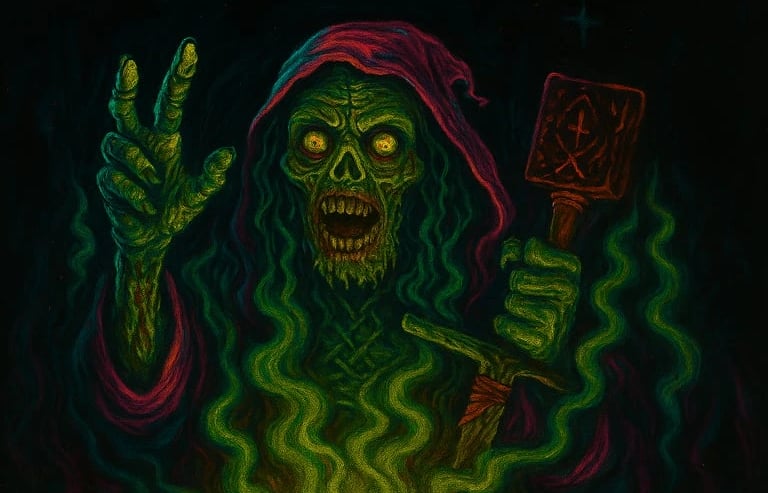
Caption: Undead Sorcery in Neon Flesh — a vision of scary zombies where sorcery, rot, and ritual converge in the Faces & Hellscapes mythos.
Invocation:
When the Dead Refuse Silence
There are landscapes where the earth itself seems to remember every scream, where the soil is not soil but a black sponge swollen with blood, and where the air carries the metallic tang of rusted chains and burnt offerings. In such places, the dead do not rest. They stir, they twitch, they rise — not as souls seeking peace, but as husks bound to hunger, as vessels of a sorcery that thrives on repetition and ruin.
Scary zombies are not a joke, not a carnival theme, not the shambling parody of cinema. It is the revenant of exhaustion, the embodiment of a world that cannot stop consuming itself. It is the corpse that refuses to collapse, the worker who labors beyond death, the soldier who fights long after the war has ended, the citizen who obeys even when the state itself has rotted away. It is the face of undead sorcery, the spell that binds flesh to motion long after meaning has fled.
But in this age, the revenant does not rise in silence. It rises in neon flesh, its bones lit by the flicker of failing billboards, its skin glowing with the phosphorescence of irradiated skies. The zombie staggers through cities that are themselves corpses, skyscrapers hollowed out like ribcages, highways cracked like femurs, neon signs buzzing like the last synapses of a dying brain. This is not folklore. This is not quaint. This is the apocalypse dressed in electric light, the end of the world rendered in synthetic color.
To speak of zombies here is to speak of faces and hellscapes — the faces of the undead, each one a mask of hunger, each one a mirror of our own exhaustion; and the hellscapes they inhabit, landscapes that are not merely backdrops but living curses, environments that gnaw at the living as surely as the dead do. The zombie is not just a character. It is a symptom. It is a prophecy. It is the flesh‑made proof that the world itself has become a necromancer, raising its victims again and again to stagger through the ruins.
This is the beginning of our descent. We will peel back the skin of the archetype, examine the anatomy of the undead, trace the rituals that bind them, and wander the neon wastelands they inhabit. We will meet the faces of the revenant — the thrall, the warlord, the prophet of rot — and we will learn how to build hellscapes that breathe, bleed, and curse.
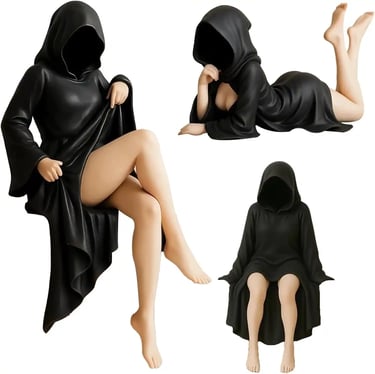
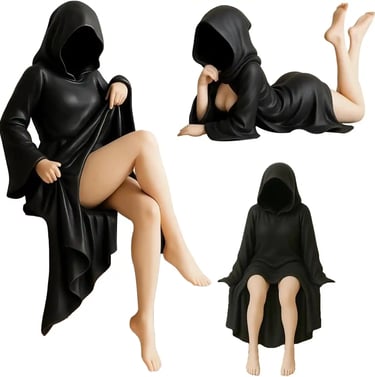
$27.99 - Amazon
From the vaults of the uncanny: a piece forged for those who walk the line between horror and ritual. Available now on Amazon.
From the Wasteland: A Cursed Artifact
The Flesh That Refuses to Rest
Anatomy of the Undead, Body as Battlefield
The body of the undead is not a vessel of peace; it is a war zone, a contested territory where decay and persistence gnash their teeth against one another, where every tendon is a rope pulled taut between collapse and continuation, where every bone is a splintered banner waving in a storm that never ends. To look upon the zombie is to look upon a body that has refused the contract of silence, a body that has betrayed the grave and chosen instead to stagger, to gnaw, to persist in grotesque parody of life.
The skin is the first battlefield. It does not heal, it does not close, it does not forgive. It sloughs and peels, it splits and hangs, it glows with the phosphorescence of rot and the sickly shimmer of neon flesh. In the old world, skin was a boundary, a sacred veil between the self and the world. In the undead, that veil is torn, and through the rents in its fabric we glimpse the machinery of hunger, the exposed gears of a body that should have stopped but did not.
Beneath the skin, the muscles writhe like ropes soaked in brine, twitching with the memory of motion. They do not move with grace but with compulsion, jerking and spasming as if pulled by invisible strings. The zombie does not walk; it is dragged forward by the echo of life, by the sorcery that binds it, by the hunger that drives it. Each step is a convulsion, each gesture a seizure, each movement a reminder that the body is no longer a servant of will but a battlefield of forces that care nothing for dignity.
The bones are cracked monuments, scaffolds that should have collapsed but instead hold their ground in defiance of entropy. They creak like old doors, they splinter like dry wood, they jut through the skin like white knives. The skeleton of the undead is not a structure of support but a cage of persistence, a prison that traps hunger inside and drags it forward.
And then there is the face — the most terrifying battlefield of all. The face of the undead is not a mask of identity but a ruin of expression, a place where eyes glow with unnatural light, where jaws hang loose and gnash without command, where tongues loll like dead serpents. To meet the gaze of a zombie is to meet the gaze of hunger itself, stripped of personality, stripped of mercy, stripped of everything but the need to consume.
The body of the undead is not merely decayed; it is enchanted. It is a battlefield where necromancy and entropy wrestle endlessly, where the sorcerer’s spell collides with the grave’s demand for silence. The zombie is not alive, but it is not dead either. It is the flesh that refuses to rest, the body that refuses to surrender, the battlefield that refuses to declare a victor.
And in this battlefield, there is no peace. There is only the endless war of hunger against decay, of motion against collapse, of sorcery against silence. The zombie staggers not because it chooses to, but because it cannot stop. Its body is a scripture of refusal, a sermon of persistence, a grotesque hymn to the possibility that death itself can be denied — but only at the cost of becoming something monstrous.
Sorcery of Reanimation
Necromancy, Ritual, and the Binding of Will
The dead do not rise on their own. They are pulled upward, dragged screaming through the soil by hands that are not their own, compelled by forces that refuse to let silence reign. Reanimation is not accident — it is sorcery. It is the deliberate theft of rest, the binding of flesh to motion, the chaining of a corpse to hunger.
Necromancy is not a single spell but a system, a lattice of rituals that stitch together what should remain apart. The necromancer does not simply whisper a word and watch the grave open; they carve sigils into bone, they anoint the tongue with ash, they hammer nails of iron into the joints so that the body remembers how to move. Every ritual is a violation, every gesture a theft, every syllable a command that echoes louder than the silence of death.
The binding of will is the cruelest part. The zombie is not free. It does not choose to rise. It is shackled to the necromancer’s hunger, to the ritual’s command, to the curse’s demand. Its body is a puppet, its hunger a leash, its staggering steps the choreography of someone else’s cruelty. And yet, within that binding, there is resistance. The corpse remembers. The flesh remembers. The battlefield of the body becomes the battlefield of the soul, where the will of the dead claws against the chains of the living.
The rituals of reanimation are not always grand. Sometimes they are whispered in alleys, painted in blood on the underside of bridges, etched into the circuitry of neon signs that flicker above ruined streets. In the age of neon flesh, necromancy has adapted. The old grimoires are rewritten in ultraviolet light, the old chants are sampled into industrial beats, the old altars are replaced with screens that glow like false suns. The sorcery of reanimation is not locked in the past; it thrives in the wastelands of the present, feeding on electricity as easily as it once fed on blood.
And yet, no matter how the ritual is dressed, the essence remains the same: to bind what should be free, to animate what should be still, to enslave what should be released. Necromancy is not creation but theft. It is not life but parody. It is not resurrection but imprisonment.
The zombie, then, is not merely a monster. It is a victim. It is a body stolen from silence, a soul shackled to repetition, a face forced to wear hunger like a mask. To look upon the undead is to look upon the cruelty of sorcery itself, the arrogance of those who would command the grave, the hubris of those who believe that death can be conquered without consequence.
But the necromancer knows the truth: every binding frays, every chain rusts, every spell eventually turns on its caster. The undead do not forget. They do not forgive. The sorcery that raises them is also the sorcery that damns the one who wields it. To command the dead is to invite their gaze, to feel their hunger turn toward you, to know that one day you too will stagger, bound by the same rituals you once spoke.
This is the sorcery of reanimation: a cycle of theft, a ritual of cruelty, a binding that never holds forever. It is the art of making the flesh refuse rest, of forcing silence to scream, of turning the grave into a stage where hunger performs endlessly. And in the glow of neon, in the hum of ruined cities, the rituals continue, binding corpse after corpse, until the world itself becomes a necropolis, and every street is a procession of the unwilling dead.
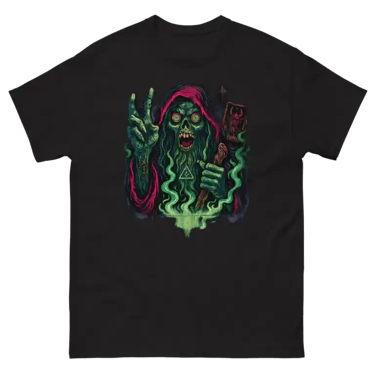
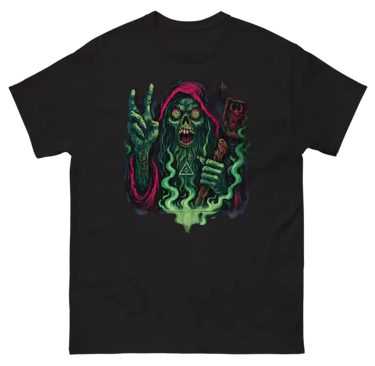
The Revenant’s Wardrobe: Zombie Warlock Edition
Summoned from the grave and stitched in neon shadow, this tee carries the mark of the Zombie Warlock — a relic for those who walk with the undead.
$22.50
Neon Flesh and the Wasteland
Modern Hellscapes, Irradiated Cities, Techno‑Occult Imagery
The world that births the undead is not a pastoral graveyard, not a moss‑covered cemetery where silence reigns and ivy curls politely around stone. No — the zombie of this age rises in a wasteland where the sky itself is poisoned, where the horizon glows with the sickly fluorescence of irradiated clouds, where the ruins of cities hum with the static of broken machines. This is the modern hellscape, the stage upon which the revenant staggers, the theater of neon and ash where flesh itself becomes a screen for sorcery.
The neon flesh of the undead is not metaphor but mutation. Their skin glows with the residue of fallout, their veins pulse with the phosphorescence of chemical waste, their eyes burn with the reflected light of shattered billboards that still flicker slogans into the void. The wasteland is not silent; it buzzes, it hums, it screams in electric tongues. The zombie is lit not by moonlight but by the artificial glow of a world that refuses to die, a world where even the ruins advertise, even the rubble glows.
The cities are carcasses. Skyscrapers stand like broken teeth, their glass shattered, their steel frames exposed like ribs. Highways crack and buckle, their asphalt veins split open, their painted lines glowing faintly under the ultraviolet haze. Subways flood with black water, tunnels echo with the shuffle of the undead, neon graffiti pulses like sigils scrawled by desperate hands. The city is not merely ruined; it is enchanted, cursed by its own excess, transformed into a techno‑occult labyrinth where every shadow hides a revenant and every light is a false sun.
The wasteland itself is alive. The soil glows faintly, irradiated and restless. The rivers run thick with chemical sludge, glowing green and orange like molten veins. The air is heavy with static, every breath a communion with poison. And through it all, the undead stagger, their bodies glowing like lanterns of decay, their movements jerky and compulsive, their hunger amplified by the very toxins that animate them.
This is not the folklore zombie of the village graveyard. This is the neon revenant, the child of apocalypse, the emissary of a world that has burned itself into perpetual twilight. It is not raised by a single necromancer but by the collective sorcery of industry, war, and waste. The rituals of reanimation are no longer whispered in crypts; they are broadcast through satellites, encoded in circuitry, etched into the circuitry of failing machines. The wasteland itself has become the necromancer, and every corpse within it is a potential disciple.
The imagery of this hellscape is not subtle. It is grotesque, it is luminous, it is overwhelming. Imagine a horde of zombies staggering through a rain‑soaked street, their flesh glowing pink and green under the broken neon of a strip club sign, their eyes reflecting the static of a television that still plays commercials for products that no longer exist. Imagine a warlord zombie, crowned in rusted wires, standing atop a pile of bones lit by the glow of a reactor core that never cooled. Imagine a prophet of rot, its body tattooed with glowing circuitry, its voice a distorted chant broadcast through broken speakers scattered across the ruins.
This is the techno‑occult wasteland: a place where sorcery and circuitry blur, where necromancy is powered by electricity, where the undead are not only victims of ritual but also conduits of a new, monstrous magic. The zombie is no longer just a corpse animated by hunger; it is a neon icon, a glowing sigil of apocalypse, a reminder that the world itself has become a ritual too vast to escape.
And in this wasteland, the living are not spared. Those who survive are marked by the same glow, their skin tattooed by radiation, their eyes reflecting the same neon haze. They are half‑alive, half‑undead, staggering through the ruins with the same compulsions, the same hungers, the same exhaustion. The line between survivor and revenant blurs, until the wasteland itself becomes a single organism, a single cursed body, glowing in the dark, refusing to rest.
Faces of the Undead
The Thrall, the Warlord, the Prophet of Rot
The undead are not a single face, not a single hunger, not a single story. They are a legion of archetypes, each one a mask of ruin, each one a role in the theater of decay. To walk among them is to wander through a gallery of horrors, each figure a different sermon of persistence, each visage a different hymn of hunger.
The Thrall
The thrall is the most common, the most pitiful, the most terrifying in its simplicity. It is the corpse that rises not with ambition but with obedience, a body bound to the will of another, a husk animated by command. The thrall does not question, does not resist, does not dream. It staggers forward with empty eyes, its jaw slack, its hands reaching not because it chooses but because it must.
And yet, in its emptiness, the thrall is a mirror. It reflects the exhaustion of the living, the endless repetition of labor, the compulsion to move without meaning. The thrall is the worker who cannot stop, the consumer who cannot rest, the citizen who obeys even when the world has collapsed. It is the most human of the undead, because it shows us what we already are when stripped of choice.
The Warlord
The warlord is the opposite of the thrall. It is not bound but binding, not commanded but commanding. It rises from the grave not as a servant but as a sovereign, its body crowned in rusted wires, its flesh armored in bone and scrap metal, its eyes burning with the sorcery of domination. The warlord does not stagger; it strides. It does not hunger blindly; it hungers strategically.
The warlord gathers thralls like a shepherd gathers sheep, binding them to its will, driving them into battle, building armies of the unwilling dead. Its voice is a rasping command, its gestures are rituals of control, its presence is a curse that spreads obedience like a plague. The warlord is not content to wander the wasteland; it seeks to rule it, to carve kingdoms out of ruins, to raise banners of bone over cities of ash.
And yet, the warlord is still a corpse. Its crown is rust, its throne is rubble, its armies are made of hunger and exhaustion. It rules nothing but ruin, commands nothing but decay. Its empire is a necropolis, its legacy a silence that will eventually swallow even its own name.
The Prophet of Rot
The prophet is the strangest of the undead, the most unsettling, the most dangerous in its ambiguity. It does not hunger for flesh but for meaning. Its body is tattooed with glowing circuitry, its bones etched with sigils, its voice a distorted chant that echoes through broken speakers and shattered temples. The prophet does not stagger or stride; it preaches.
The prophet of rot is not content to consume; it seeks to explain, to justify, to sanctify the hunger of the undead. It speaks of decay as destiny, of rot as revelation, of hunger as holy. Its sermons are not words but infections, ideas that spread like plagues, visions that turn survivors into disciples, that transform horror into worship.
To encounter the prophet is to risk contamination of the soul. Its gaze is not empty but burning, its voice not mindless but persuasive. It does not command armies with chains but with belief, binding the living to its cause, convincing them that to rot is to be free, that to hunger is to be holy, that to stagger through the wasteland is to fulfill prophecy.
The prophet of rot is the most terrifying face of the undead because it blurs the line between monster and messiah. It is not only a corpse but a scripture, not only a revenant but a revelation. To kill it is to silence a sermon, but sermons do not die easily. They linger, they echo, they spread.
The undead are not one face but many. The thrall, the warlord, the prophet — each is a mask of hunger, each a role in the endless ritual of decay. Together they form the legion, the chorus of ruin, the procession of neon flesh staggering through the wasteland. And in their faces, we see not only monsters but mirrors, not only horror but prophecy, not only death but the persistence of something far more unsettling: the refusal to rest.
The Hunger That Devours Meaning
Psychology of the Zombie, Hunger as Metaphor
The zombie is not defined by its gait, nor by its rot, nor even by the sorcery that binds it. It is defined by its hunger. That endless gnawing, that ceaseless craving, that compulsion that cannot be reasoned with or satisfied. Hunger is the scripture of the undead, the single commandment carved into every bone, whispered into every nerve, etched into every fragment of flesh that refuses to rest.
But this hunger is not only for flesh. It is deeper, stranger, more symbolic. The zombie devours not only bodies but meaning itself. Every bite is a theft of identity, every gnash of teeth a stripping away of story. The living are not consumed merely as meat but as symbols, as memories, as carriers of significance. To be eaten by the undead is to be erased, to be reduced to fuel for repetition, to be stripped of everything that made you singular.
The psychology of the zombie is not complex, but it is profound. It is the psychology of compulsion, of endless appetite without satisfaction, of motion without destination. It is the mirror of our own compulsions — the endless scrolling, the endless consuming, the endless working, the endless wanting. The zombie is terrifying not because it is alien but because it is familiar. Its hunger is our hunger, stripped of disguise, stripped of justification, stripped of everything but the raw, gnawing need.
In the wasteland of neon and ash, hunger becomes the only law. The thrall staggers because it must feed. The warlord commands because it must feed. The prophet preaches because it must feed. Every archetype, every face of the undead, is bound by the same hunger, the same compulsion, the same refusal to rest. Hunger is the sorcery that binds them, the ritual that animates them, the curse that defines them.
And yet, there is something almost holy in this hunger. It is pure, it is honest, it is stripped of pretense. The zombie does not lie about its needs. It does not cloak its appetite in ritual or justification. It hungers, and it acts. In this way, the undead are more truthful than the living, who disguise their hungers in language, in ideology, in ritual. The zombie is hunger made flesh, hunger made visible, hunger made undeniable.
But hunger is also a void. It devours not only flesh but meaning, not only bodies but stories. The more the undead consume, the less there is to signify, the less there is to remember, the less there is to distinguish one from another. Hunger flattens everything into sameness, into repetition, into the endless staggering of bodies through wastelands that no longer carry names.
This is the true horror of the zombie: not that it kills, but that it erases. Not that it consumes, but that it devours meaning itself. The world of the undead is not only a necropolis of bodies but a necropolis of stories, a wasteland where nothing matters because everything is consumed, everything is reduced, everything is stripped to hunger.
And yet, in that void, there is revelation. To look upon the zombie is to confront the hunger within ourselves, the compulsions we cannot silence, the appetites we cannot satisfy. It is to see ourselves stripped of disguise, stripped of story, stripped of everything but the gnawing need to continue, to consume, to persist. The zombie is not only a monster but a mirror, reflecting the hunger that devours us all.
Building Hellscapes Environments
That Breathe, Bleed, and Curse
A zombie without a world is only half a horror. The revenant requires a stage, a landscape that does not merely contain it but conspires with it, a setting that is itself a character — hostile, alive, and hungry. To build a hellscape is to craft more than scenery; it is to summon an environment that breathes like a beast, that bleeds like a wound, that curses like a priest.
The hellscape is not backdrop. It is an antagonist. It resists the living, it nurtures the undead, it shapes every step of the story. A wasteland of neon and ash is not passive; it gnaws at the survivors, it blinds them with false light, it poisons them with every breath. The city ruins are not ruins at all but traps, labyrinths of broken glass and rusted steel that cut, crush, and echo with the shuffle of revenants. The environment itself is a ritual, a spell cast across miles of terrain, binding the living into its curse.
Principles of the Hellscape
Hostility as Atmosphere Every element of the environment should resist survival. Roads collapse beneath weight, rivers glow with poison, the very air hums with static that frays the nerves. The land itself is an enemy.
Decay as Aesthetic Nothing is whole. Buildings lean like broken teeth, statues crumble into faceless idols, machines hum with half‑life, their lights flickering like dying stars. The world is a corpse, and the undead are its maggots.
Sorcery as Infrastructure The hellscape is not only ruined but enchanted. Graffiti glows like sigils, streetlights buzz with occult energy, abandoned temples hum with circuitry. Every ruin is a ritual site, every shadow a summoning.
Movement as Ritual The environment should force the living into patterns — detours, spirals, dead ends. To walk through the wasteland is to participate in a ritual of exhaustion, a choreography dictated by the ruins themselves.
Examples of Living Hellscapes
The Neon Necropolis: A city where every billboard still flickers, every screen still glows, every advertisement still screams into the void. The undead stagger through the glow, their flesh lit like lanterns, their hunger amplified by the static of endless messages.
The Irradiated Cathedral: A collapsed reactor core transformed into a temple of rot. Its walls glow with sickly green light, its chambers echo with the chants of prophets of decay, its very air burns the lungs of the living.
The Bone Wastes: A desert of shattered skeletons, dunes of ash and marrow, where the wind itself howls like a chorus of the dead. Every step crunches on bone, every gust carries the dust of forgotten bodies.
The Circuit Graveyard: A field of broken machines, their wires exposed like veins, their screens flickering with ghostly images. The undead here are half‑flesh, half‑circuit, their bodies glowing with the sorcery of electricity.
The Hellscape as Character
To design a hellscape is to give the world a face, a voice, a hunger. The wasteland is not neutral; it is complicit. It conspires with the undead, it conspires against the living, it ensures that every step forward is a step deeper into ritual. The survivor does not merely fight zombies; they fight the land itself, the poisoned air, the cursed architecture, the glowing ruins that whisper in electric tongues.
The true horror of the hellscape is not that it kills, but that it changes. It reshapes those who walk through it, tattooing their skin with radiation, filling their lungs with ash, etching their minds with visions. To survive the wasteland is to become part of it, to carry its curse in your body, to stagger forward glowing with the same neon flesh as the undead.
Closing Incantation
The Neon Revenant Staggering Forever
The zombie is not a monster that can be killed, not a story that can be ended, not a nightmare that can be woken from. It is a mirror, and mirrors cannot be destroyed without shattering the self that gazes into them. The undead are not only revenants of flesh but revenants of meaning, emissaries of a world that refuses to rest, prophets of a hunger that will not be silenced.
In the glow of neon flesh, we see ourselves. We see the exhaustion that drives us, the compulsions that bind us, the hungers that devour us. We see the thrall in our obedience, the warlord in our domination, the prophet in our ideologies. We see the wasteland in our cities, the sorcery in our machines, the rot in our rituals. The zombie is not elsewhere; it is here. It is not other; it is us.
The revenant staggers not because it chooses but because it cannot stop. And neither can we. We scroll, we consume, we labor, we repeat. We rise each day like corpses pulled from the grave, compelled by forces we do not control, driven by hungers we cannot name. The zombie is not a fantasy but a revelation, a scripture written in flesh, a sermon preached by decay.
And yet, there is a strange beauty in this horror. The neon glow of the wasteland is not only grotesque but sublime, a terrible radiance that illuminates truths we would rather not see. The zombie is not only a monster but a teacher, not only a curse but a prophecy. It shows us what we are becoming, what we already are, what we cannot escape.
The closing incantation is not a dismissal but a recognition: the undead will not rest, and neither will we. The revenant will stagger forever, glowing in neon, gnawing at flesh, devouring meaning, erasing stories. And in its endless hunger, it will hold up a mirror to our own endlessness, our own refusal to stop, our own compulsion to persist even when persistence itself has become monstrous.
So let the zombie remain. Let it stagger through the wasteland, let it glow in neon, let it preach its sermons of hunger and rot. For in its endless procession, we see the truth of our age: that the apocalypse is not an ending but a repetition, not a silence but a noise, not a death but a persistence. The zombie is the revenant of our world, the neon icon of our exhaustion, the face of a future that has already arrived.
And it will not rest. And neither will we.
FAQ
Undead Sorcery in Neon Flesh: Scary Zombies
Q: What is the central theme of this article? It is an exploration of the zombie as more than a cliché — as a revenant of exhaustion, a body bound by sorcery, a mirror of our compulsions. The piece reframes the undead as neon‑lit archetypes staggering through irradiated hellscapes.
Q: Why “neon flesh”? Because the modern revenant does not rise in silence or shadow. It glows with fallout, with failing billboards, with the electric residue of a poisoned world. Neon flesh is the mutation of the undead in the age of circuitry and waste.
Q: What are the archetypes of the undead described here? Three primary faces emerge:
The Thrall — obedience without thought, the endless worker.
The Warlord — domination without purpose, the sovereign of ruin.
The Prophet of Rot — ideology without mercy, the preacher of decay. Each is both monster and mirror, horror and reflection.
Q: Why describe the body of the zombie as a battlefield? Because it is contested ground — decay pulling one way, sorcery another, hunger gnawing, memory resisting. The undead body is not at peace; it is a war zone where no side ever wins.
Q: What role do hellscapes play in the story? They are not scenery but characters. The wasteland conspires with the undead, poisons the living, and ensures that every step is a ritual of exhaustion. A hellscape is a curse written into geography.
Q: What does the zombie’s hunger symbolize? It is not only for flesh but for meaning itself. The undead devour identity, story, and difference, flattening everything into sameness. Their hunger is our hunger, stripped of disguise.
Q: What is the ultimate message of Undead Sorcery in Neon Flesh: Scary Zombies? That the zombie is not only a monster but a mirror. It reflects the compulsions of our age, the wastelands we have built, and the exhaustion that drives us. The revenant staggers forever — and in its glow, we see ourselves.
Become the Undead
— Read the Subscriber Story
A subscriber‑only short story inspired by this guide, plus exclusive sketches, prompts, and early access to tiny‑run drops.
One email a month. Cancel anytime.
About the Author:
Marcel Helmar is a cinematic occult artist, writer, and founder of Horror & Hexes. His work blends ritual symbolism, folk horror, and studio‑grade printmaking to produce limited art drops, immersive essays, and practical ritual guides.
Marcel’s writing and visual practice have been used by filmmakers, podcasters, and indie publishers to create atmosphere and authenticity; he teaches workshops on image making, lore research, and publishing for dark‑culture creators. Visitors can browse his gallery, read deep‑dive essays, or join the mailing list for exclusive drops and process notes.
Connect
Explore dark tales and ritualistic mysteries here.
Support
+1-337-718-0155
© 2025. All rights reserved.
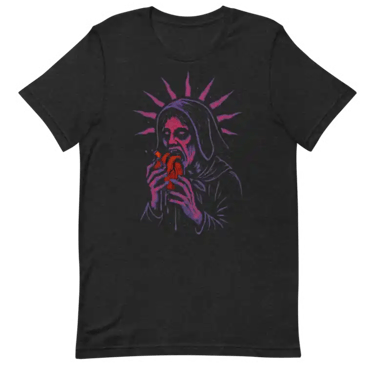
Flesh Catechism T-Shirt
Eat Your Heart Out
$22.50